

Herman Göring – From Flying Ace to Forced Psychiatric Care in Stockholm
Hermann Göring – one of Nazi Germany’s most infamous figures – has a largely forgotten past in Sweden. Between 1924 and 1925, he lived in Stockholm with his Swedish wife, Carin. But his time in Sweden was far from a peaceful domestic life – it became a chaotic period marked by morphine addiction, violent outbursts, forced psychiatric treatment, and finally, admission to Långbro Hospital in southern Stockholm.

Hermann Göring preparing for takeoff in his Albatros D.III, May 27, 1917.
From War Hero to Addict
Göring had become a celebrated hero during the First World War, earning Germany’s highest military decoration as a fighter pilot. After the war, he worked as a civilian pilot and came to Sweden in 1920 to join the newly founded Svensk Lufttrafik AB in Frihamnen. It was during a flight to Rockelsta Castle that he met Carin von Kantzow (née Fock). The couple married in 1923 and settled in Stockholm.
But Göring carried the shadows of war within him. After being wounded during the failed Beer Hall Putsch in Munich, he was treated with the potent opiate Eukodal. The addiction took hold quickly, and during his time in Sweden his dependency spiraled out of control.
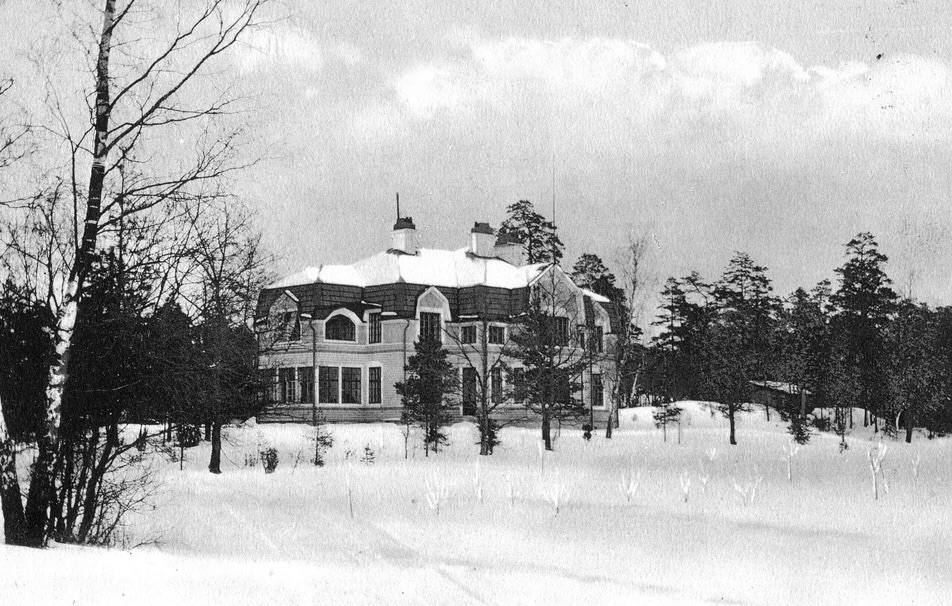
Aspudden Nursing Home. The building was demolished in the 1960s. Photographer unknown.
Aspudden: The Sanatorium that Lost Control
In 1924, Carin, frightened by her husband’s violence, arranged for him to be admitted to a private nursing home in Aspudden. He was supposed to undergo detoxification – but instead he broke into the medicine cabinet, injected himself, and threatened the staff. When the director, Anna Törnquist, realized the situation was untenable, she called the police.
On August 31, 1925, police officers and firefighters arrived at the sanatorium. Göring refused to come quietly and was taken by force, strapped down in an ambulance, to Katarina Hospital, a mental institution in central Stockholm.
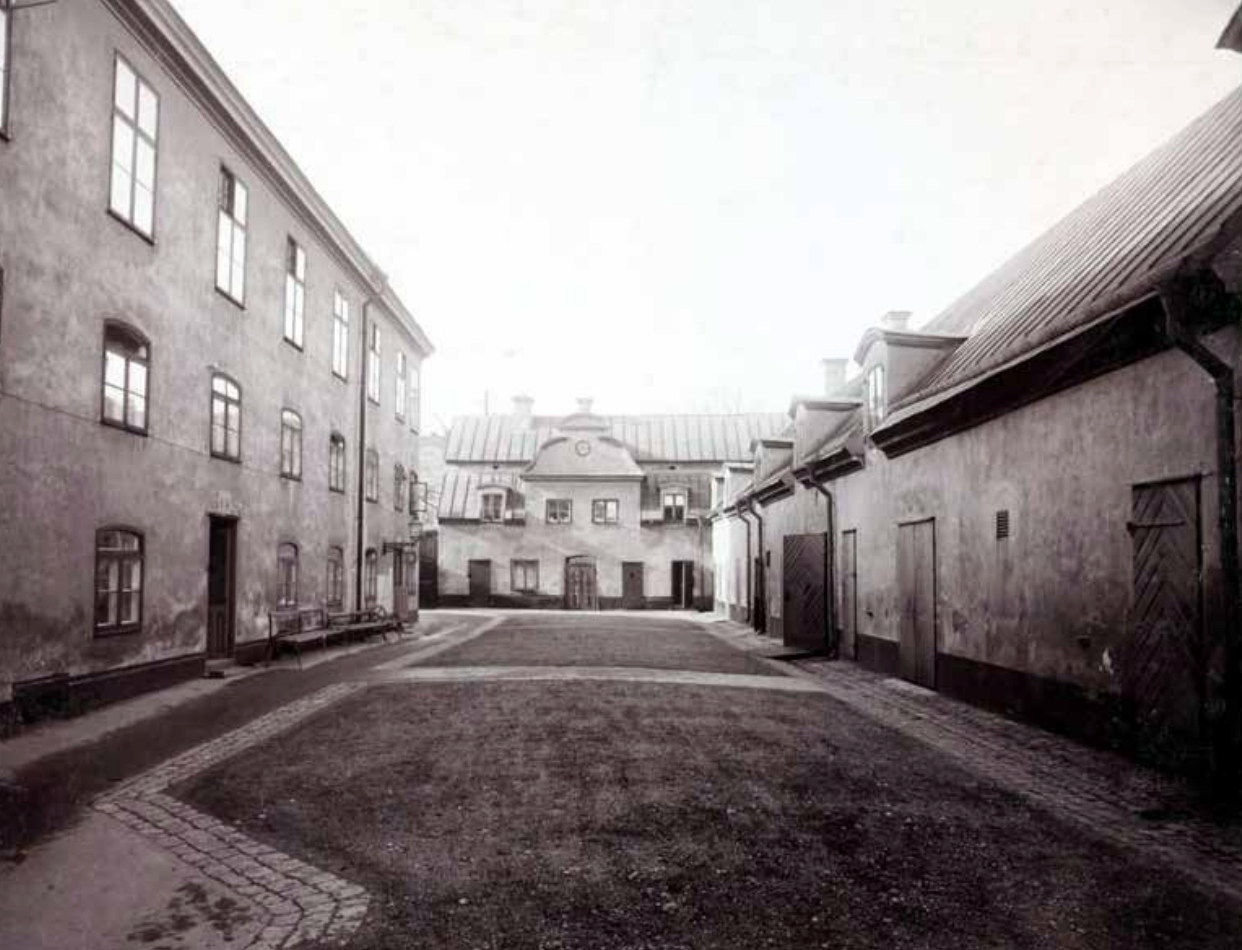
Katarina Hospital, the courtyard in 1906. Photographer: Frans Gustaf Klemming.
Katarina Hospital: “I’m not insane!”
“I’m not insane! I’m not insane!” he shouted as he was brought into Ward 4 at Katarina Hospital in late August 1925. His furious, humiliated outbursts were later remembered by the orderly Ruben Zetterlund, who was assigned to care for him. Zetterlund recalled how Göring cried out for a lawyer and insisted that he had been locked up illegally. He saw himself as the victim of an injustice – not as a man in need of treatment.
A Dangerous Patient – Antisemitism, Delusions, and Addiction
Caring for the future Nazi leader soon became a nightmare. In the medical records from Katarina Hospital, Göring was described as unstable and aggressive. He suffered from deep depressions, wept uncontrollably, and was tormented by delusions. The staff noted that he was “hysterical, self-loathing, anxious, and difficult to manage.”
Even at this early stage, Göring expressed an openly antisemitic worldview. He accused his doctor of being part of a Jewish conspiracy and claimed that both the medical staff and his own wife had been bribed. He was terrified that news of his confinement would reach Germany – a country where he longed to regain fame and power.
His paranoia and extremist ideas made him an increasingly problematic patient. Ruben Zetterlund, who initially felt some sympathy for him, changed his view completely when the Nazis seized power in Germany in 1933.

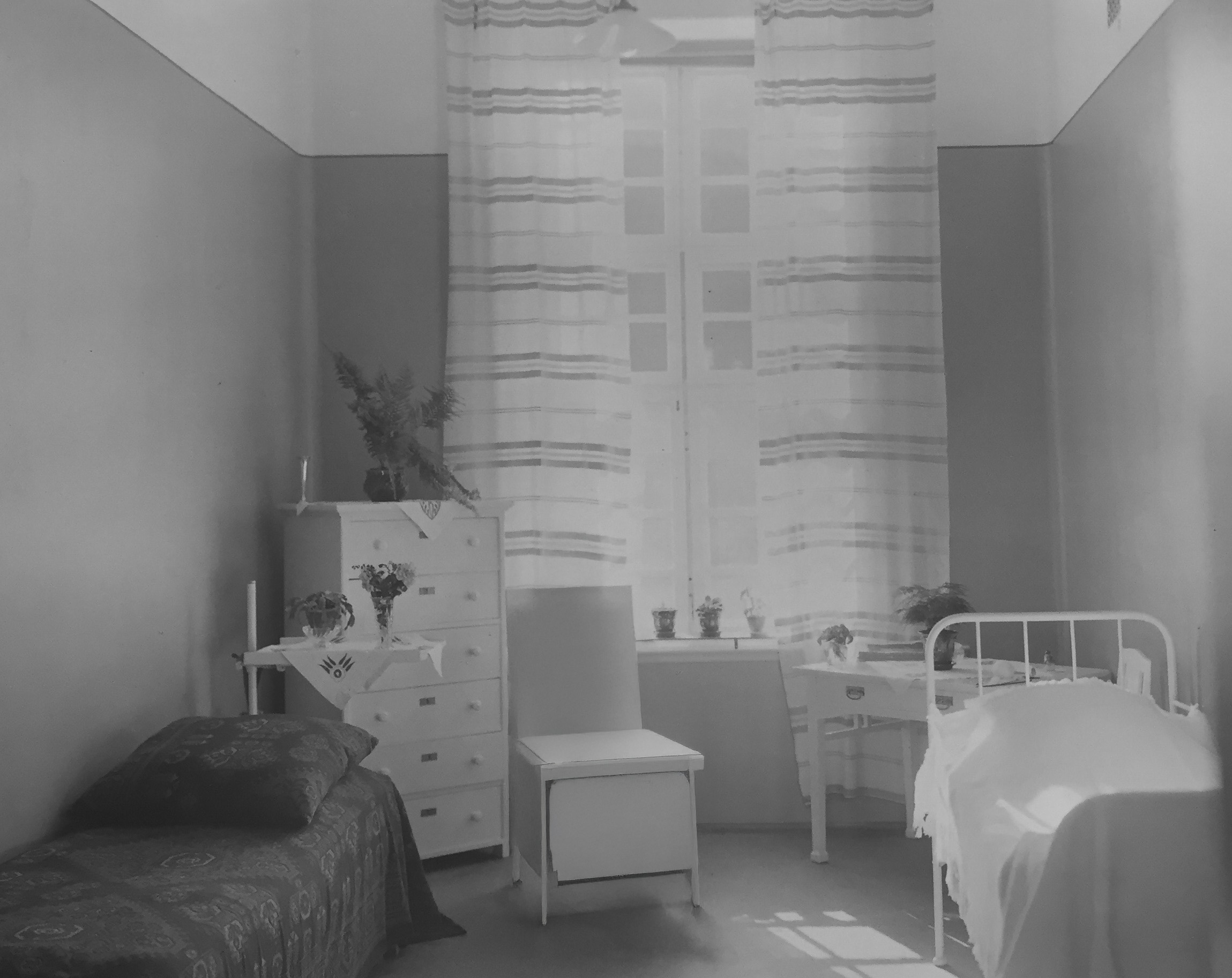
Långbro hospital, Stora Mans in moonlight, circa 1920. Photographer: Unknown.
Hermann Göring’s Time at Långbro Hospital – Hallucinations, Suicide Attempts, and Antisemitic Rage
On September 2, 1925, Hermann Göring arrived at Långbro Hospital in southern Stockholm. He was not forcibly committed; instead, he voluntarily signed an official request for admission. In the document, he agreed to comply with the hospital’s regulations and accept the restrictions required for treatment.
The once-celebrated fighter pilot was now a man broken by addiction and mental instability. He spent about a month in Ward 7, a section reserved for affluent patients. But his stay at Långbro was anything but peaceful.
The Medical Records: Hallucinations, Paranoia, and Violent Outbursts
An excerpt from Göring’s patient record from the autumn of 1925 gives a chilling glimpse into his condition. He is described as:
“Hysterical, self-important, egocentric, a hater of Jews – has dedicated his life to fighting them, previously one of Hitler’s closest associates.”
His mental state was deeply affected by withdrawal from Eukodal (a morphine derivative), and he showed clear signs of psychosis. According to the journal, he experienced several dramatic hallucinations in which he saw Abraham and Paul, whom he described as “the most dangerous Jews in existence.”
In these visions, Abraham supposedly tried to bribe him with three camels to make him abandon his struggle against the Jews. Göring reportedly “screamed, described his visions aloud, tried to fight them, and claimed that Abraham twisted a glowing spike into his back.”
At one point he became convinced that a Jewish doctor planned to “cut out his heart.” He made multiple suicide attempts — both by hanging and strangulation — and managed to smuggle in a heavy object, an iron weight, which he tried to use as a weapon against the staff.
“Göring Was Completely Insane” – Dr. Johannes Gip on Treating Him at Långbro
One of the doctors responsible for Göring’s care at Långbro was Dr. Johannes Gip. In an interview with Göteborgs-Posten in 1967 – over forty years later – Gip broke medical secrecy and spoke openly about the patient who would later become one of Nazism’s top figures.
“Göring was completely insane when we took him in. He was utterly deranged from his enormous drug abuse,” said Johannes Gip.
Despite the grim circumstances, Gip claimed that the treatment eventually succeeded:
“Even though Hermann Göring was an extremely difficult patient, I managed to treat him back to some degree of recovery.”
Carin Göring: A wife in Crisis
Göring’s wife, Carin Göring, was present during parts of his treatment. According to Dr. Gip, she repeatedly described the situation as hopeless and seriously considered divorce.
“She was deeply uncertain. I advised her to wait and see how things developed,” Gip told Aftonbladet in a 1974 interview.
Carin’s doubts reflected the despair that must have dominated their life in Stockholm — a marriage overshadowed by addiction, paranoia, and her husband’s violent outbursts.
From Treatment to Friendship – An Unexpected Aftermath
After three separate stays at Långbro Hospital — in 1925, 1926, and 1927 — Göring finally left Sweden and returned to Germany. But according to Dr. Johannes Gip, there were signs of recovery before his departure.
“After his recovery, Göring and I became good friends. We often went for walks together and discussed politics,” the doctor later recalled.
It was during these walks through the green parklands of Långbro that Göring spoke passionately about Adolf Hitler and the National Socialist Party — the very movement that would soon plunge Europe into darkness.
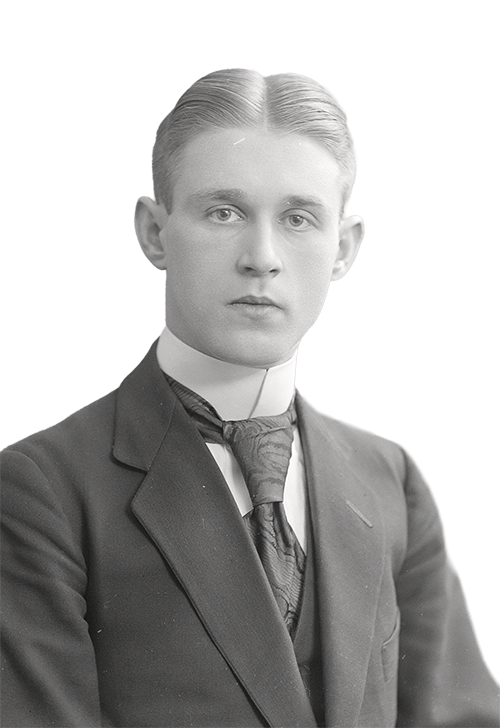
Johannes Gip, physician at Långbro Hospital. Image: Alvin.
Content
Epilogue: A Courageous Disclosure – The Patient File that Spread Around the World
When Göring became one of Hitler’s closest men, Ruben Zetterlund — the orderly who had cared for him at Katarina Hospital — decided to act. In violation of all hospital regulations, he smuggled Göring’s patient records out of the institution and handed them over to the antifascist publishing house Clarté.
The materials were photographed, archived, and later published in a book that drew international attention.
Revealing patient information was a serious breach of medical confidentiality, but Zetterlund was clear about his motives:
“When the Nazis began their persecution of dissenters, I realized something had to be done to stop this threat to humanity.”
Zetterlund risked his job — yet he never regretted what he did. Many years later, he summarized his reasoning in an interview:
“Nazism had to be stopped at any cost — and I still believe that today.”
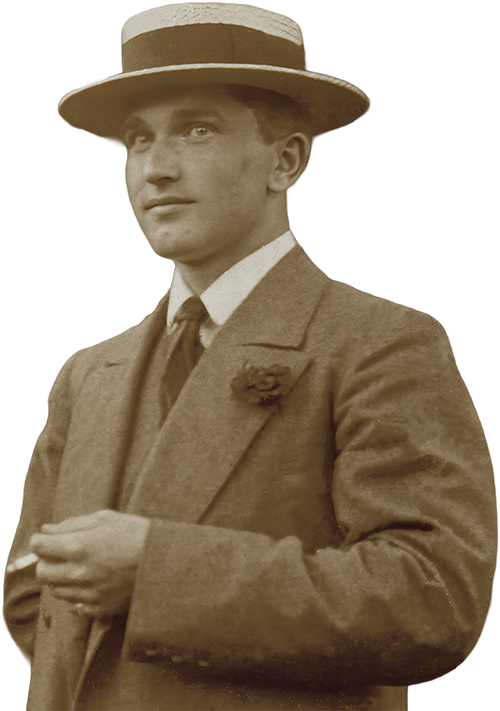
Ruben Zetterlund, 1920s.
Sources
Björn Fontander; Carin Göring skriver hem, Carlsson Bokförlag 200.
Bosse Schön; Hitlers knarkande hantlangare, Bosse Schöns förlag 2010.